How to Stimulate Language Development in Children Ages 3 to 5 Without Screens: A Deep Guide for Mindful Parents
There is something many parents feel, but few say out loud.
“My child doesn’t talk much.”
“He understands everything, but doesn’t express himself.”
“He gets frustrated and ends up crying because he can’t explain what he wants.”
Between ages 3 and 5, language is not just about talking more.
It is about building thought.
It is about organizing the world through words.
And when we support it well — without screens, without rushing, without overstimulation — we are planting something that will shape a child’s academic and emotional life for years to come.
This is not a list of random tips.
It is a clear framework to support language development at home with professional intention.
In This Guide, You Will Learn
- What is really happening in the brain between ages 3 and 5.
- Why screens interfere with deep language development.
- How to create daily routines that expand vocabulary without pressure.
- Common mistakes that slow down verbal expression.
- Activities you can apply this week.
Why Language Shapes Child Development
Language is not just communication.
It is organized thinking. It is emotional regulation. It is memory. It is the ability to resolve conflict.
Between ages 3 and 5, a linguistic explosion occurs.
The child:
- Moves from two-word phrases to complete sentences.
- Begins to narrate experiences.
- Uses “why” constantly.
- Attempts to explain the world.
If, during this stage, the child receives rich dialogue, open-ended questions, and genuine listening, cognitive structures strengthen.
If the child receives passive input (such as excessive screen consumption), language can become reactive, repetitive, or superficial.
This is not exaggeration. It is neurodevelopment.
Pedagogical Framework: The ColoreaMundo Method
At ColoreaMundo, we operate under one clear principle: language is built through presence.
Not in front of a screen.
The ColoreaMundo Method proposes three pillars to stimulate language in ages 3–5:
- Intentional conversation.
- Open-ended symbolic play.
- Narration of everyday experiences.
The goal is not for the child to “talk a lot.”
It is for the child to think while speaking.
What Happens in the Brain Between Ages 3 and 5
During this stage, neural connections consolidate around:
- Verbal comprehension.
- Production of complex sentences.
- Cause-and-effect relationships in storytelling.
- Use of pronouns and verb tenses.
When a child says:
“I went to the park and I fell because I was running fast.”
They are not just talking.
They are integrating memory, sequence, causality, and emotion.
This does not develop through watching videos.
It develops through conversation.
How to Stimulate Language Without Screens
1. Narrate Everyday Life
While cooking. While cleaning up toys. While walking.
Instead of giving short commands:
“Put that away.”
Try:
“Let’s put the big red blocks away first. Then the small ones.”
It’s not about talking more.
It’s about modeling structured language.
2. Ask Questions That Expand Thinking
Avoid closed questions like:
“Did you like it?”
Instead use:
“What was your favorite part?”
“What do you think happened next?”
These questions expand vocabulary and narrative thinking.
3. Open-Ended Symbolic Play
A box can become a boat. A spoon can become a microphone.
When adults do not over-direct play, children create stories.
And when they create stories, they create language.
Editorial Perspective
Language does not accelerate under pressure. It expands through connection.
Constant correction can inhibit. Calm modeling strengthens.
Common Mistakes That Slow Language Development
1. Always Anticipating
If adults constantly finish a child’s sentences, the child stops trying.
2. Correcting With Judgment
Repeatedly saying “That’s not how you say it” can create insecurity.
It is better to naturally rephrase.
Child: “I breaked that.”
Adult: “Oh, it broke, right?”
We model without shaming.
3. Using Screens as Emotional Translators
Many children learn phrases from cartoons.
But they do not learn to express what they feel.
That only happens through real dialogue.
Immediate Application for This Week
Concrete proposal:
For 10 minutes daily:
- Turn off screens.
- Choose an everyday moment (dinner, bath, walk).
- Ask three open-ended questions.
- Listen without interrupting.
That is enough to begin.
Age-Based Recommendations
Ages 3–5
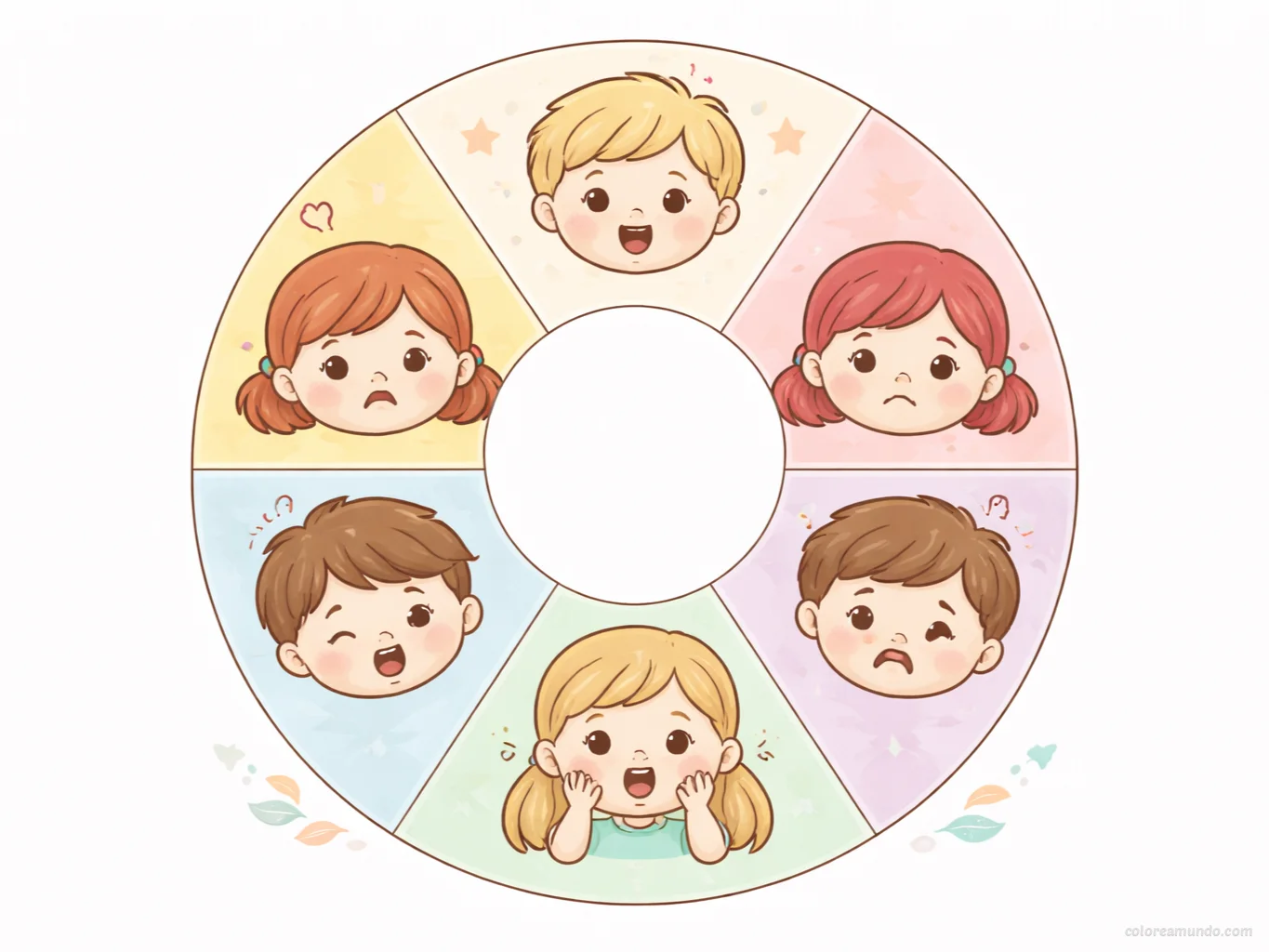
- Prioritize emotional vocabulary.
- Narrate simple actions.
- Practice recounting what happened today.
Ages 6–8
- Introduce connectors: because, then, after.
- Encourage short invented stories.
Ages 9–12
- Work on argumentation.
- Differentiate opinion from fact.
- Hold structured family discussions.
Real Questions from Parents
Is it normal if a 3-year-old doesn’t pronounce words clearly?
Yes.
Articulation matures gradually.
If concerns persist, consult a professional—but avoid constant comparison.
Does reading stories really help?
Yes, if there is dialogue.
Read and ask questions. Not just read and close the book.
How much screen-free time is necessary?
At this stage, less is better.
But the key is not only removing screens. It is filling that space with real presence.
Suggested Internal Links
- Ages 3–5 pathway: language development and symbolic play.
- Parent guide: how to establish screen-free routines.
- Educational resources: emotional vocabulary cards.
Editorial Closing
You do not need expensive materials.
You need intentional time.
This week, choose one daily moment for unhurried conversation.
Just that.
And watch how language begins to flourish when there is real presence.
Then explore our age-based pathways and apply one practical activity from home.
Language is not taught. It is cultivated.